EUREF-Campus

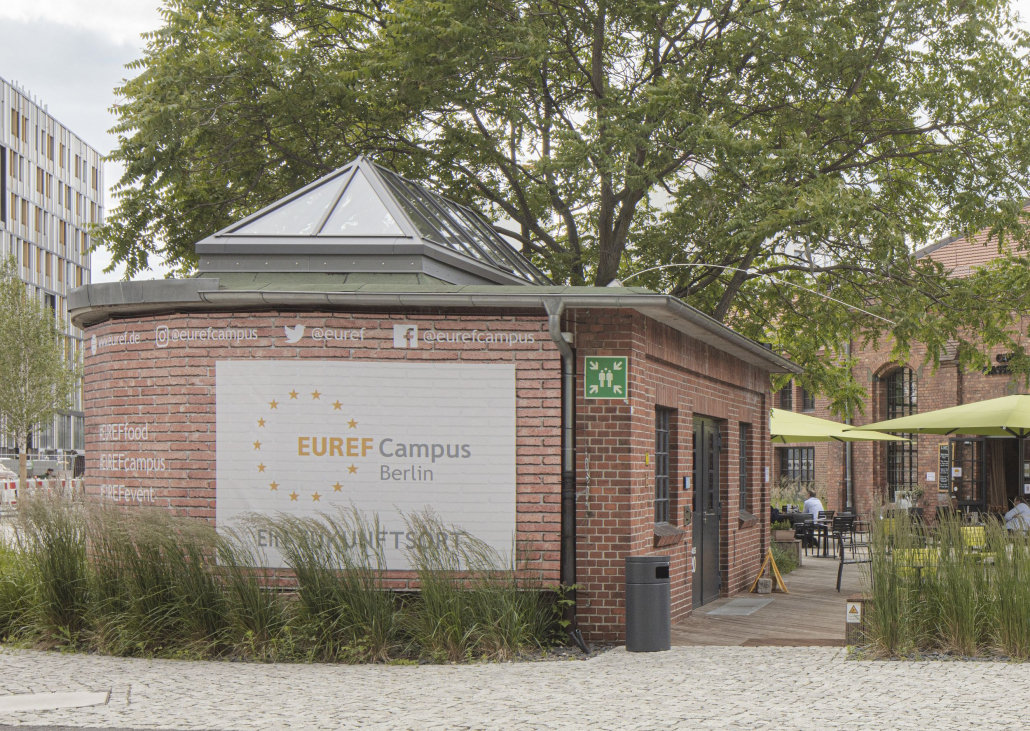
EUREF stands for “European Energy Forum” and is a model district for climate-neutral, resource-efficient, and smart cities. Since acquiring the site in 2008, EUREF AG has developed the area around the Schöneberg gasometer into a real-world laboratory for the transition to renewable energy. With an innovative community of business and research, a carbon-neutral energy supply, a smart energy grid, energy-efficient buildings, a testing platform for the mobility of the future, and numerous research projects, it proves every day that the energy transition is feasible and affordable. Since 2014, the EUREF campus has already been meeting the German government’s CO₂ climate targets for 2045.

With events on climate protection and sustainability, guided campus tours and company visits, as well as informative projects such as the EUREF Energy Workshop, the urban district is constantly expanding its role as a forum and showcase for the energy transition.

Energy and Mobility

100 %

of the EUREF-Campus’s heating requirements are covered by its own combined heat and power plant

2,500 meters

of underground district heating pipes

2,400 megawatt hours

of electricity generated by the CHP plant in the EUREF Energy Workshop

The energy supply on the EUREF-Campus is CO₂-neutral. Through the use of renewable energy sources, innovative energy storage systems, the consistent linking of state-of-the-art technology, and the construction of energy-efficient and intelligent buildings, the campus has evolved into a true location of the future. The EUREF-Campus is a smart urban district: in addition to electromobility, shared mobility is also a top priority. And: autonomous driving has been tested here for a long time.

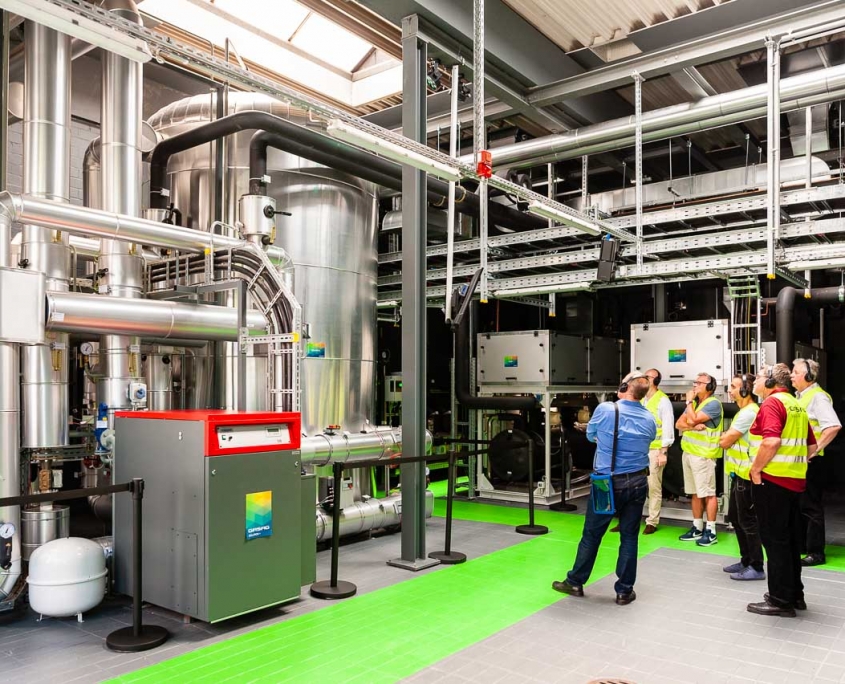
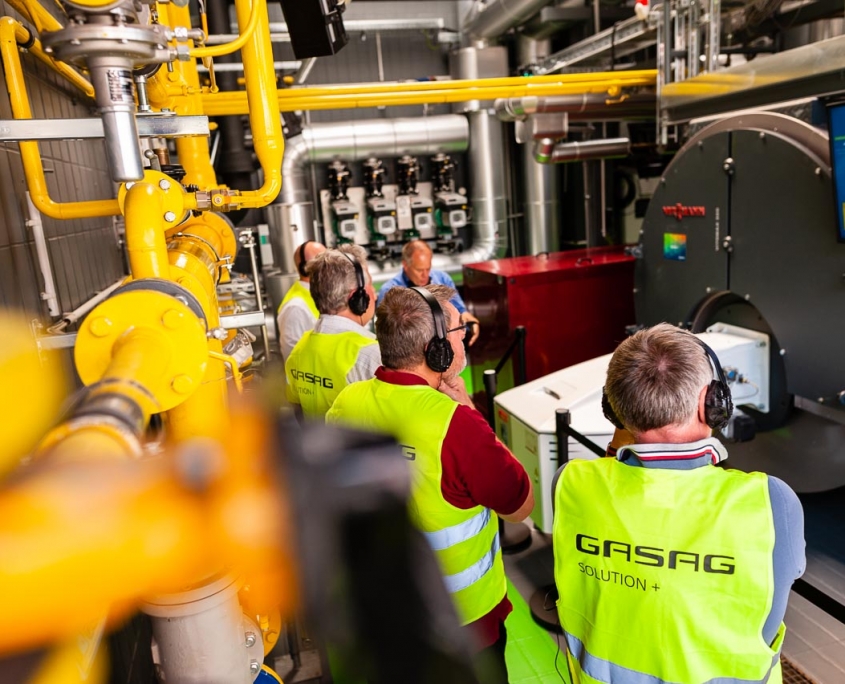
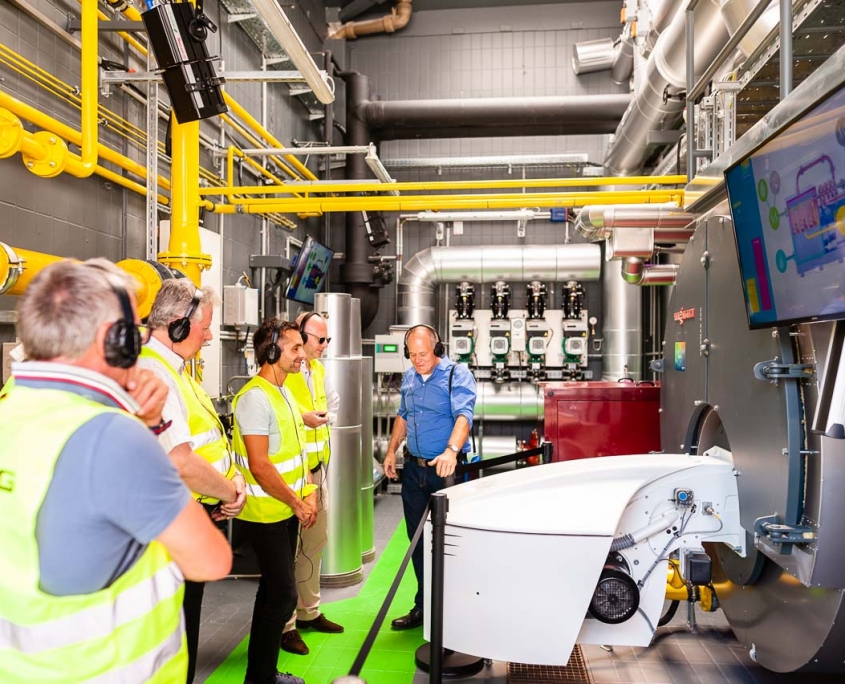
GASAG Solution Plus GmbH operates the EUREF-Energiewerkstatt,, which is the energy heart of the site. It generates 100 percent of the heat required on site.

The central element of the Energy Workshop is a combined heat and power plant. A generator is powered by the combustion of biomethane to produce electricity. The electricity is fed directly into the Berlin power grid. The waste heat is used to heat water. On the EUREF campus, this heat is used to heat the offices. The underground district heating pipes, through which the 90-degree hot water is pumped to the buildings, are 2.5 kilometers long.

Together with two smaller combined heat and power plants that produce electricity for the operation of the energy center and the zeemobase, this covers a large part of the heating requirements on the EUREF campus. If additional heating energy is required on very cold days, two low-temperature gas boilers are available to cover peak loads. At the same time, the energy center produces cooling for the numerous server rooms and offices.

The energy center is controlled by artificial intelligence, the so-called Eco-Tool. For this purpose, around 1,000 data points from the energy workshop and the buildings provide information on what energy is consumed in which building and when. Weather forecasts and energy market data are also included in the calculations.

With the help of power-to-heat/power-to-cold technology, renewable energy can also be stored in the energy center. If too much electricity is produced on sunny or windy days in solar parks or by wind turbines, this is registered in the energy center. Surplus electricity is then used to heat or cool water and stored in two heavily insulated water tanks for later use. This storage system was part of the WindNODE research project, which was funded by the German Federal Ministry for Economic Affairs and Energy.

Audi also operates a 1.9 MWh second-use battery on the campus. Twenty discarded batteries from e-tron test vehicles are connected here to form a large stationary battery and serve as a test environment and for grid stabilization on the campus.

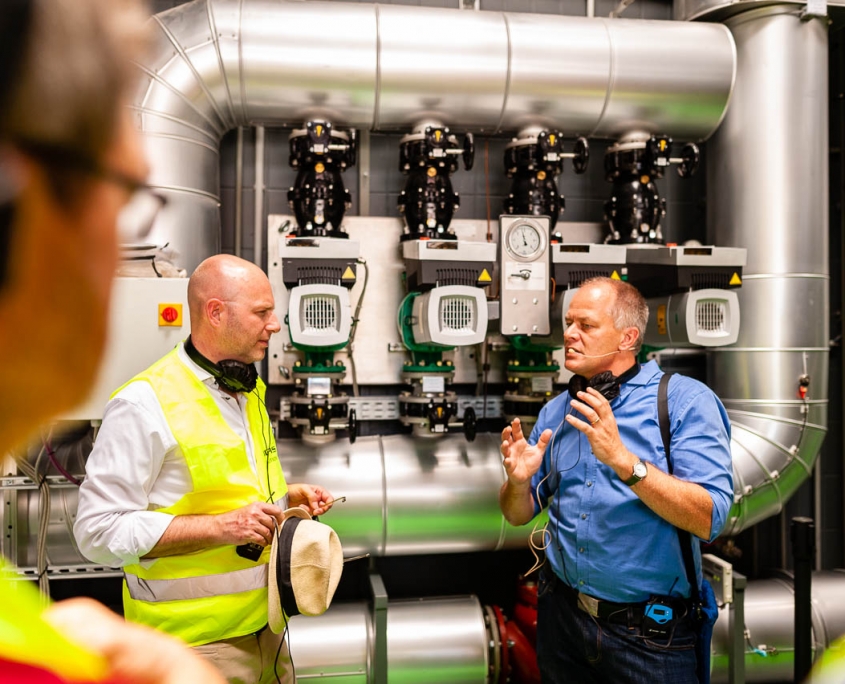
You can visit the EUREF Energy Workshop by GASAG Solution Plus on a guided tour led by experts and experience live how the energy supply of the future already works today. Further information: energiewende-erleben.de

zeemobase stands for Zero Emission Energy and Mobility Base and is the place on campus where energy and mobility converge and are connected both physically and digitally.

Technically speaking, zeemobase is a “micro smart grid” that distributes energy as efficiently as possible. A smart grid is an electricity network in which different energy sources, consumers, and storage facilities are intelligently linked. Electricity is generated using renewable energy, stored locally, and converted into mobility. Grid management balances the fluctuating supply of renewable energies with current energy consumption in an ecologically and economically sustainable manner. Since this takes place in a spatially defined area, it is referred to as a “micro smart grid.” The connection to the public power grid remains intact. The aim is to relieve the public grid through predictable energy flows and to increase the share of renewable energies.

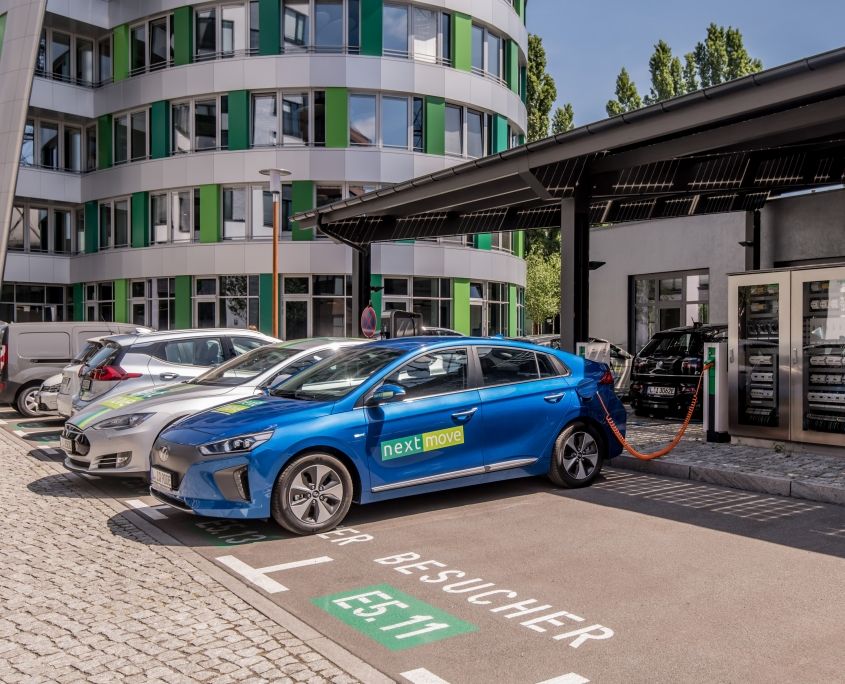
Over 20 electric charging points at zeemobase are connected to the micro smart grid, including both AC charging stations (22 kW) and DC charging stations (50 kW). The micro smart grid is operated by inno2Grid and Schneider Electric . With a powerful network of partners, innovative solutions and technologies are developed, tested, and implemented at zeemobase. Zeemobase also functions as a showroom that brings the path to climate neutrality for company locations and neighborhoods to life.

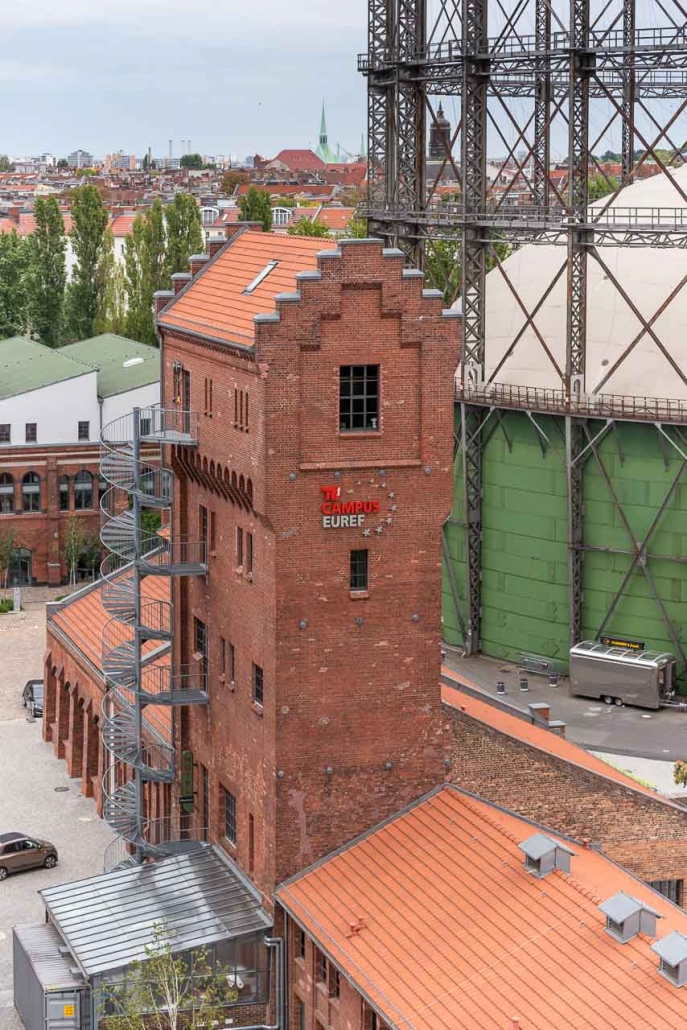
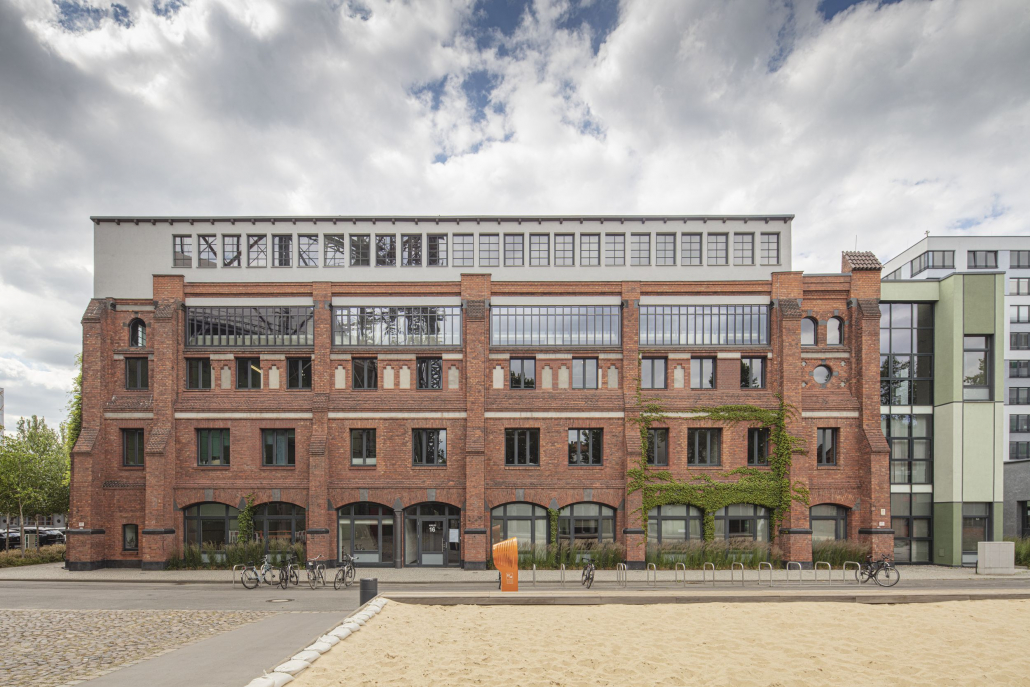
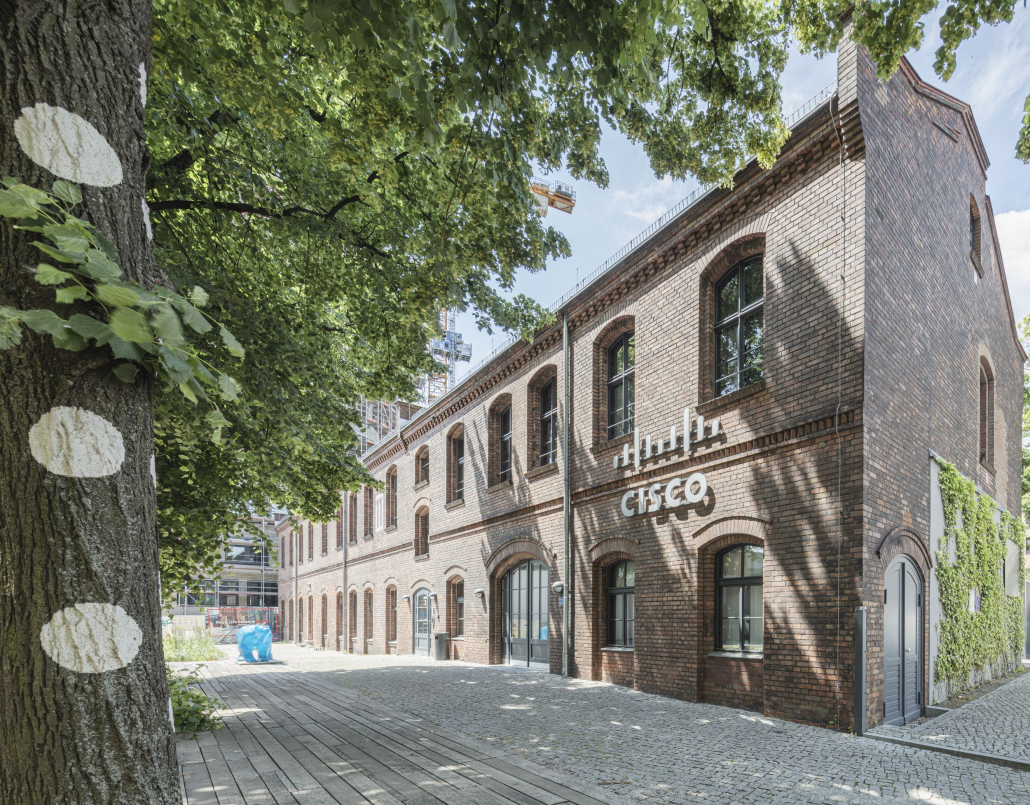
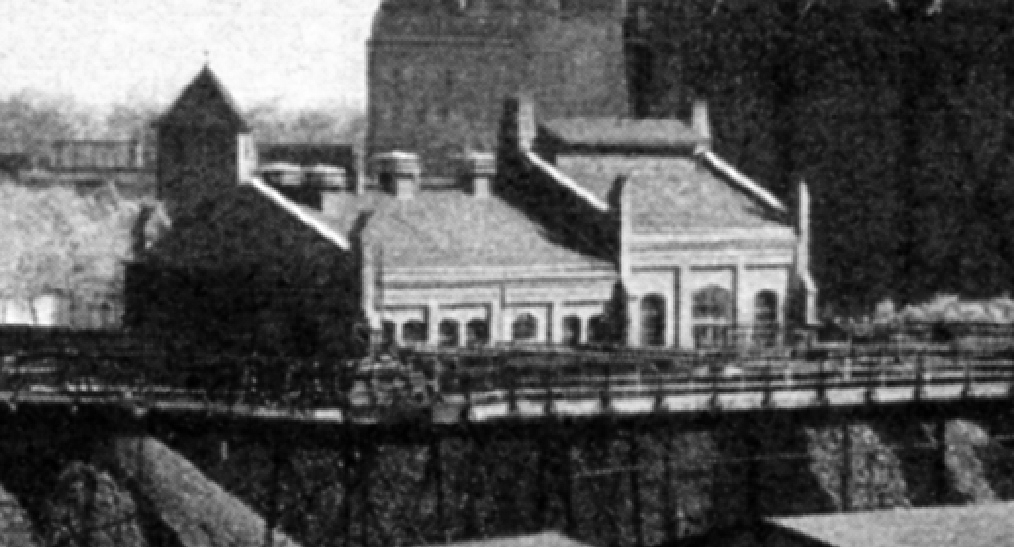
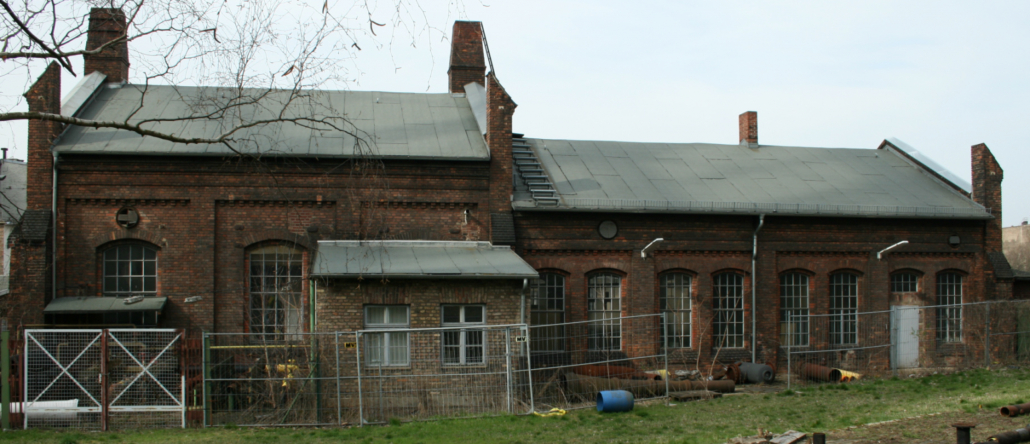
The listed buildings designed by renowned architect Alfred Messel, who also designed Berlin’s Pergamon Museum, are showcased in a unique way on the campus and shape the character of the site. Modern, energy-efficient buildings stand opposite the listed clinker and brick buildings of the former Schöneberg gasworks or are skillfully integrated with them.

The historic buildings have been renovated in accordance with monument protection, monument law, and energy efficiency requirements. All new buildings are integrated into the existing structures and have been realized as certified “green buildings.” LEED Platinum-certified new buildings, KfW Efficiency House 55 standard, automated energy load management, and innovative and energy-efficient building technologies are the hallmarks of the EUREF Campus. This also includes monitoring systems from Schneider Electric that optimize energy consumption. All buildings are connected to the local energy grid via “smart metering,” which centrally measures and controls consumption.

Modern building materials, advanced building technologies, and optimized energy use combine climate and environmental protection with low operating costs—groundbreaking ideas that pay off!

Many of the buildings also feature energy-saving insulation materials, triple-glazed windows with integrated sun protection, and smart facades. Office lighting is automatically controlled based on occupancy and daylight levels. When selecting materials, the highest possible health and environmental compatibility was taken into account.

And sustainability begins with the construction process. Wolff & Müller built the campus completely CO₂-neutral, using electricity from renewable energies and particularly energy-efficient construction machinery. The CO₂ footprint that was nevertheless generated was offset by Wolff & Müller through its own TÜV-certified CO₂ projects

A campus dedicated to modern mobility also requires a smart transportation concept.

Only electric vehicles, golf carts, taxis, bicycles, pedestrians, and emergency vehicles are permitted to use the interior area, which is protected by barriers. Bicycles can be parked above ground at the various bicycle parking facilities near the building entrances or underground in the underground garages, where they are protected from the weather. To encourage people to cycle to work, changing rooms and showers are available in several buildings.

Combustion engine-powered traffic is handled outside the inner area. This also includes motorcycles and scooters that are not electrically powered. Where possible, it is directed to the underground car park of buildings 21-22 in front of the barrier or behind the buildings to the underground car park of buildings 10-14.

Delivery traffic powered by combustion engines is handled via designated delivery zones behind the buildings. In individual cases, deliveries that must be made by trucks in the inner area can be registered with campus management in good time.

This traffic concept is supplemented by the continuous expansion of the charging infrastructure for electric cars and various sharing offers.

There are more than 180 charging stations for electric cars on the EUREF-Campus, 53 of which are open to the public. These include 12 Tesla Superchargers (V3) and over 40 charging points in the publicly accessible underground parking garages. Tenants often also have access to charging stations for e-bikes in the underground parking garages.

Incidentally, vehicles with combustion engines are only allowed to drive on the campus in exceptional cases. The campus is reserved exclusively for pedestrians, cyclists, and electric vehicles.

The campus also proves its function as a testing platform in the field of electromobility. Germany’s first fast-charging station for electric buses and the first inner-city V3 Superchargers were tested here before their use was scaled up and extended to other areas. And in 2023, Audi, together with the Mobility2Grid research campus, tested the use of charging robots here.

The campus grounds are part of the business area of Free2move and the popular sharing providers for bicycles, e-bikes, and e-scooters. The campus thus supports the switch to electric mobility on the way to and from work.

Other sharing providers include lime (e-scooters and e-bikes), TIER (e-scooters and e-bikes), Bolt (e-scooters), voi. (e-scooters and e-bikes), and DB Call a Bike (e-bikes).

The campus is an ideal testing ground for innovative transportation solutions. For example, the Emmy e-scooter, AUDI’s loading robot, TIER’s e-scooter, and CleverShuttle’s on-demand ride pooling service were all tested here before their public launch.

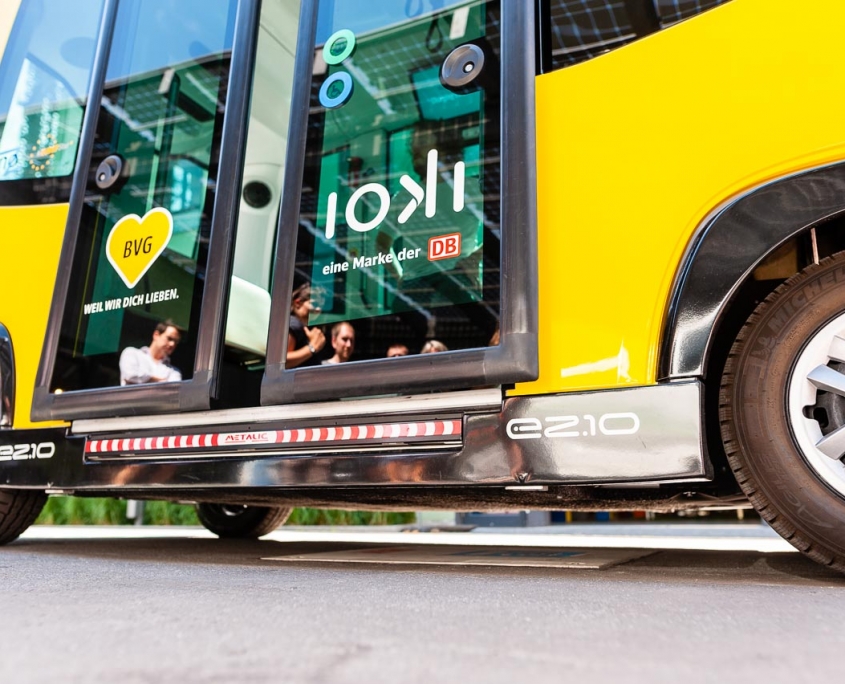
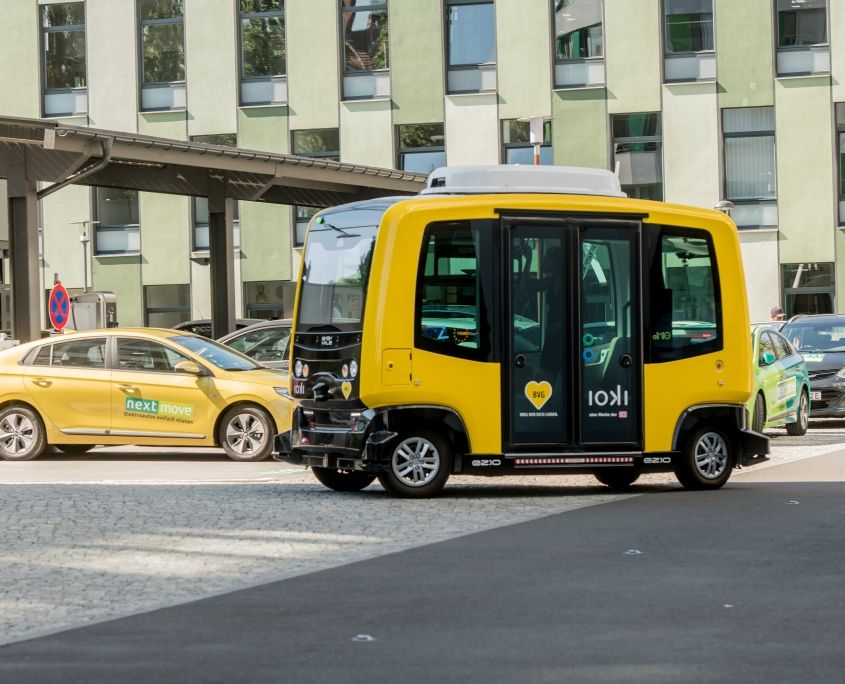
Whenever forward-looking transportation projects have been discussed in recent years, one term has been omnipresent: “autonomous driving.” The idea behind it is as simple as it is far-reaching: not only can this technology make people’s everyday lives easier by relieving them of the tedious task of driving their own cars, but above all, it could minimize accidents and control individual traffic flow without congestion. A pipe dream? Not anymore. The technology is already ready for testing and is expected to revolutionize public and, subsequently, individual local transport in just a few years. Various vehicle models have already been tested on campus, including the “Olli” (Local Motors) and “Emily” (EasyMile) electric minibuses and an autonomous sweeper (Enway).

History and Gasometer

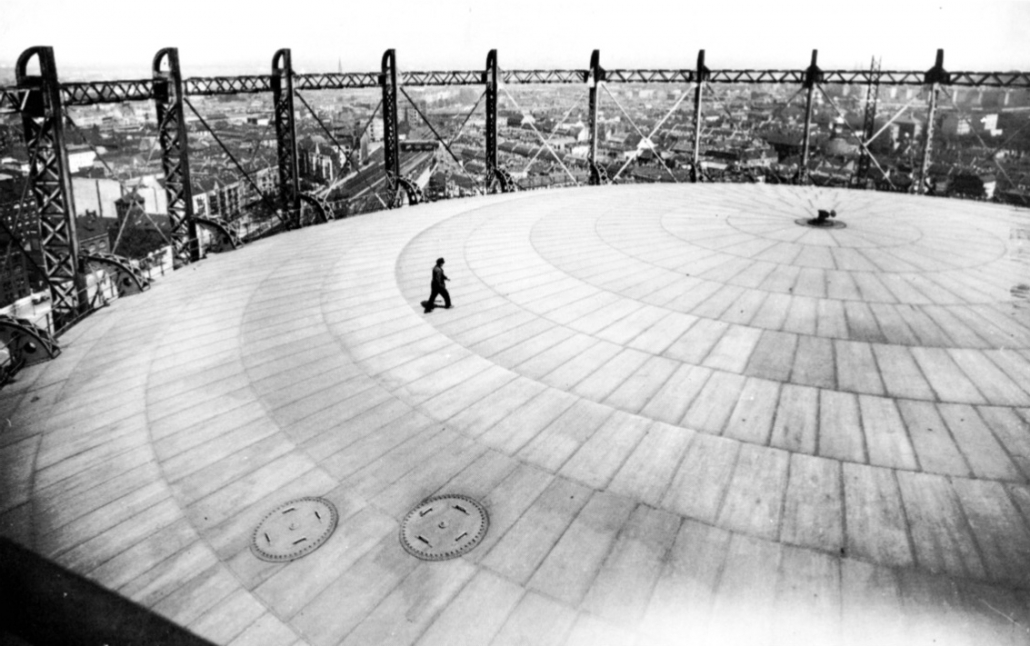
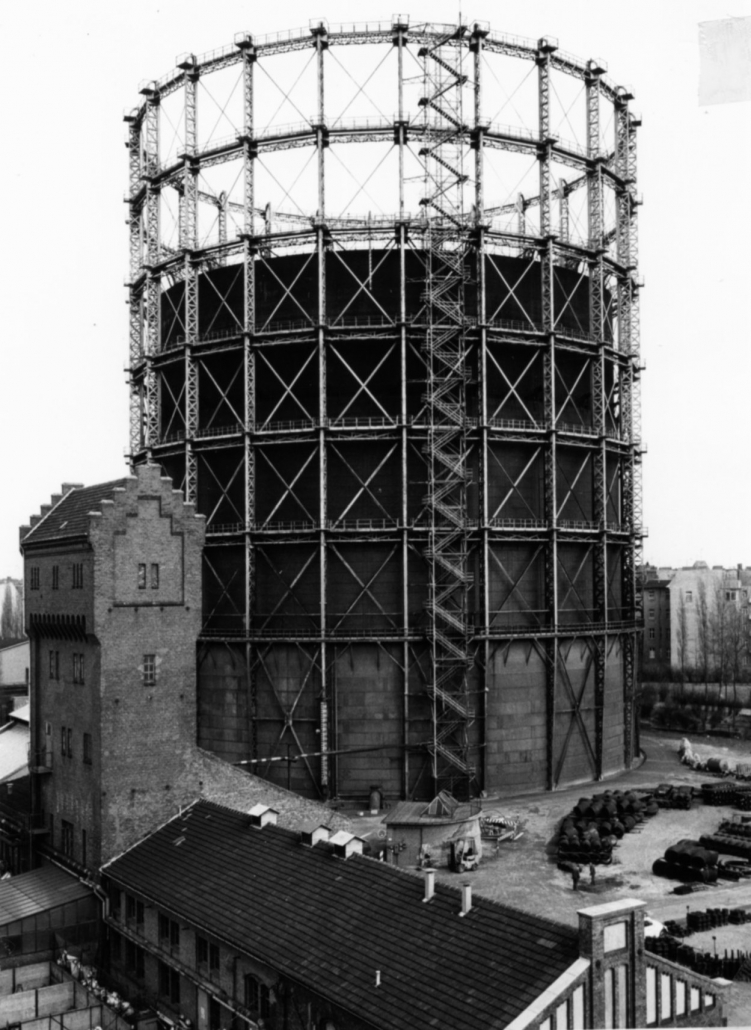
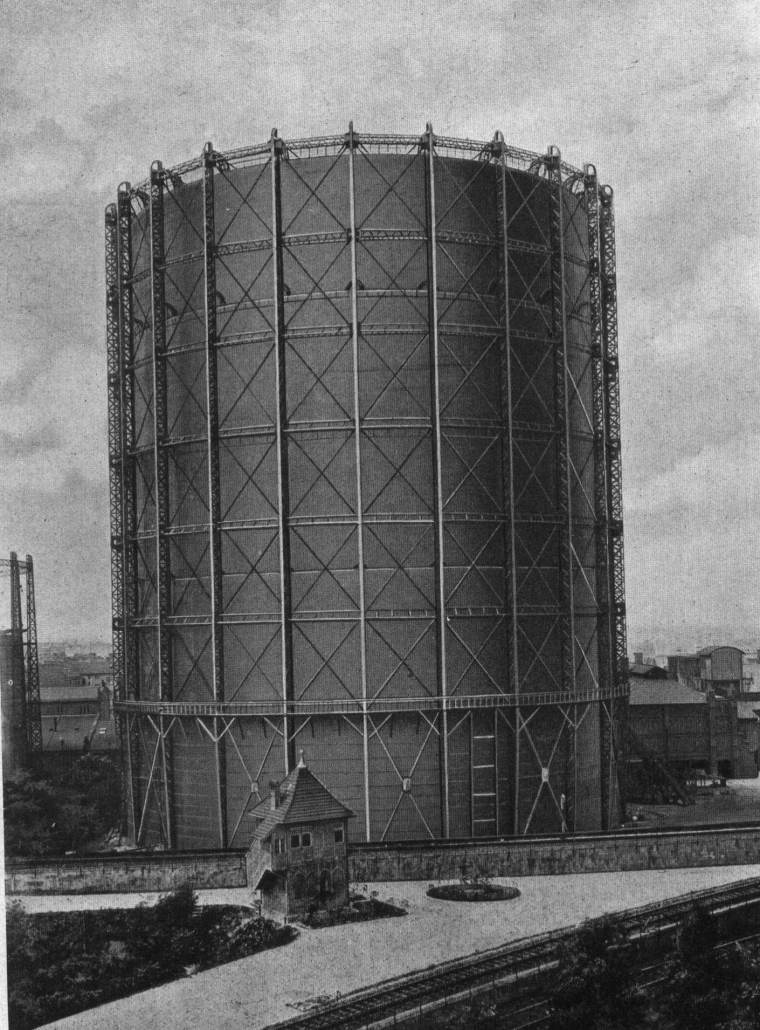
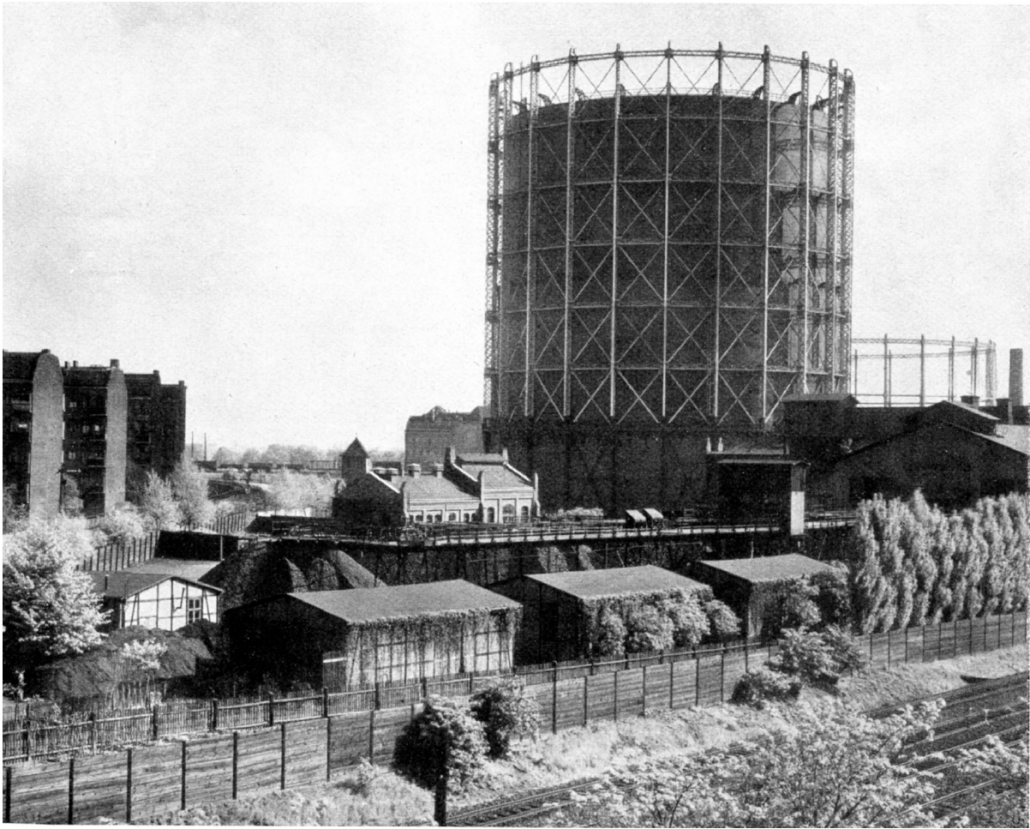
The EUREF-Campus, which ties in with the history of the site, has been built on the grounds of the former Schöneberg gasworks, creating a unique ensemble of historic buildings renovated in line with conservation guidelines and energy-efficient, smart new buildings. The centerpiece is the 80-meter-high Schöneberg Gasometer.

Upon the initiative of Berlin’s state conservator, the significant buildings of the former gasworks, including structures by the famous architect Alfred Messel, were listed as a historic monument in 1994.

In 2008, Reinhard Müller, long-standing project developer and architect specializing in historic preservation, and Johannes Tücks, now chief architect of the EUREF Campus, discovered the site around the gasometer. In an economic environment that made investment in legacy-tainted historical monuments appear unprofitable, EUREF AG acquired the site. Based on a monument preservation report, the goals for future use were gradually formulated in a development plan process with citizen participation in cooperation with the district of Schöneberg. With the completion of the gasometer in 2024, the state conservator’s goal has finally been achieved: to ensure the permanent preservation and accessibility of the monuments – based on an economic concept that enables long-term preservation.

Schöneberg Gasometer – from gas tank to think tank

The renovation of the gasometer in line with conservation guidelines and its transformation into a modern and sustainable office and conference center has revived a Berlin landmark and turned it into a symbol of the energy and transportation transition.

Modern office space has been created on an area of around 28,000 m². From here, Deutsche Bahn is driving forward the digitalization of the railways. A unique conference and event center has been created in the historic steel shell and on the upper floor, covering an area of over 2,000 m². The highlights: the forum with a retractable amphitheater and the Sky Lounge on the 15th floor. The adjoining 360° roof terrace, which is also open to the public for events and guided tours, offers a unique panoramic view of Berlin from a height of around 66 meters.

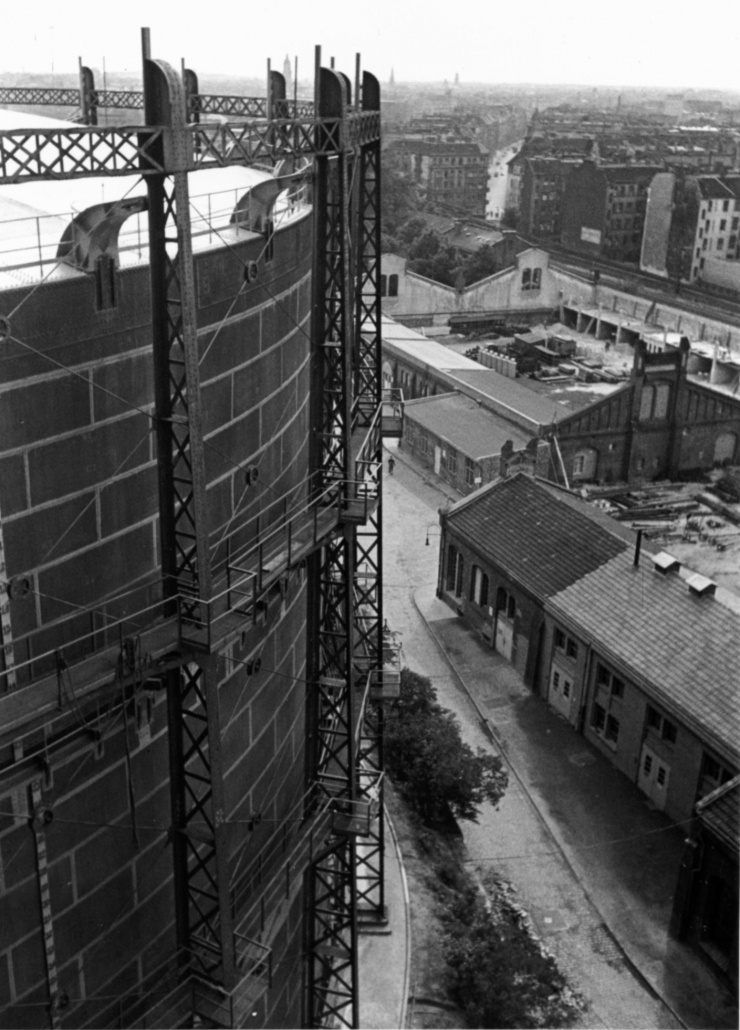
The gasometer has been preserved in its original form. The building design is based on the historical image of the telescopic gas container. Using sandblasting technology, the steel structure from 1910 was renovated in accordance with monument preservation guidelines and now serves as the frame for the round new building. The predominantly glass façade ensures a high degree of transparency for the building.

The KfW55 standard was used in the new building to implement the standard for a low-energy building, which even significantly exceeds the current legal requirements for energy consumption in accordance with the Building Energy Act (GEG). As in the other new buildings on the EUREF campus, the energy supply is smart. The cylindrical building cubature optimizes the ratio of the outer shell area to the heated volume and minimizes energy requirements. In addition to the highly insulated building envelope, the primary energy-efficient central heating and cooling system uses renewable energies and combined heat and power generation.

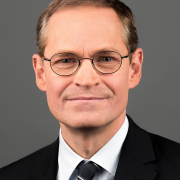
When EUREF AG took over this site in 2008, there were many politicians in Berlin who did not believe in the success of this visionary project. I am glad that we seized the opportunity that presented itself to our city here. Not only with regard to the role of the EUREF-Campus as a location for innovation, but also in terms of the intelligent conversion and enhancement of existing architectural monuments, as can now be seen once again at the gasometer.

Michael Müller (SPD), Ehemaliger Regierender Bürgermeister von Berlin
34,000

area

66 m

height of the skylounge above Berlin

200 million

Euro investment

2024

opened in 2024

Sustainability

Sustainability is at the heart of everything we do.
As the European Energy Forum, we are committed to the transition to renewable energy. We are a benchmark project in Europe and across the globe, demonstrating the feasibility and affordability of the energy transition. As a forum for energy, mobility, and sustainability, we serve as a blueprint for the carbon-neutral world of tomorrow.

Our commitment does not end with the completion of the EUREF-Campus; it begins with it. Sustainable maintenance, utilization, and reinvention are key components of this commitment.

The EUREF-Campus Berlin is all about the energy and mobility transition, climate protection, environmental protection, and sustainability. This vision is lived out in every area and by every employee of the EUREF Group.

The EUREF-Campus in Berlin and Düsseldorf are flagship projects of the energy transition: Not only do they already meet the German government’s CO₂ climate protection targets for 2045, they also ensure energy security by being independent of coal, oil, and gas. Our new buildings meet the highest energy standards (KfW 55).

We are not only a great place to work, study, and conduct research, but also internationally renowned for high-profile corporate and political events that we curate with a clear focus on sustainability, mobility, and climate protection. Our SMB certification and upcoming ISO certification support this orientation.

We firmly believe in the importance of sustainable project development. At the EUREF Campus, we are committed to environmental protection, social responsibility, and economic stability in order to promote a livable future.

The EUREF-Campus in Berlin and Düsseldorf has stood for sustainable construction from the very beginning. Excavated soil is reused, regional materials are used, and trees are replanted after clearing. Renewable building services and environmentally friendly products are the norm. Facility management is already involved during the construction phase to ensure sustainable building management.

Unser ganzheitlicher Ansatz betrifft alle Bereiche: Als Projektentwickler berücksichtigen wir die Lage und Erreichbarkeit unserer Gebäude für umweltbewusstes Mobilitätsverhalten. Als Architekten planen wir langfristig nutzbare Gebäudelayouts und wählen Materialien mit Modularität und Langlebigkeit. Auch bei Energieversorgung, Wartung und Betrieb denken wir als Bestandshalter ganzheitlich, um den Umweltimpact zu minimieren.

Als Köche legen wir großen Wert auf Nachhaltigkeit, indem wir eng mit lokalen Lieferanten kooperieren, um vielfältige, produktorientierte Gerichte zu kreieren. Dabei achten wir sorgfältig darauf, Überproduktion zu vermeiden und Lebensmittelverschwendung zu reduzieren, indem wir täglich unsere Produktionsmengen reflektieren und anpassen.

EUREF-DNA

What makes the concept of the “EUREF Campus” unique?

With a view to the construction of the second EUREF-Campus in Düsseldorf, as well as the expansion to additional locations, it was important for us to document our success factors and thus the DNA behind the European Energy Forum.

  • Green Buildings

    The EUREF Campus constructs energy-efficient buildings and minimizes land sealing. Energy conservation is central to climate protection.

  • Climate goals

    The EUREF-Campus already meets the climate goals of 2045.

  • Location

    The intelligent energy and mobility concepts of the EUREF-Campus are integrated into the geographical and historical context.

  • Future Mobility

    The EUREF-Campus is a platform for innovative mobility concepts.

  • Smart & local Integration

    The intelligent energy and mobility concepts of the EUREF-Campus are integrated into the geographical and historical context.

  • Smart Energy

    The EUREF-Campus primarily utilizes local, CO2-neutral energy sources and aims for self-sufficiency from renewable sources.

  • Sustainable Events

    The EUREF-Campus offers high-quality, sustainable events and gastronomy concepts.

  • Talent Pool

    The EUREF-Campus collaborates with universities for further education, master’s programs, and qualification measures in the field of energy transition.

  • Green Facility Management

    The EUREF-Campus prioritizes environmentally exemplary facility management, including advanced waste and recycling concepts.

  • EUREF Community

    The EUREF-community includes businesses and institutes that focus on energy transition, mobility, and climate protection

  • Work-Life-Balance

    The EUREF-Campus promotes a balanced work-life environment through its atmosphere, sustainable gastronomy options, sports facilities, and community events.

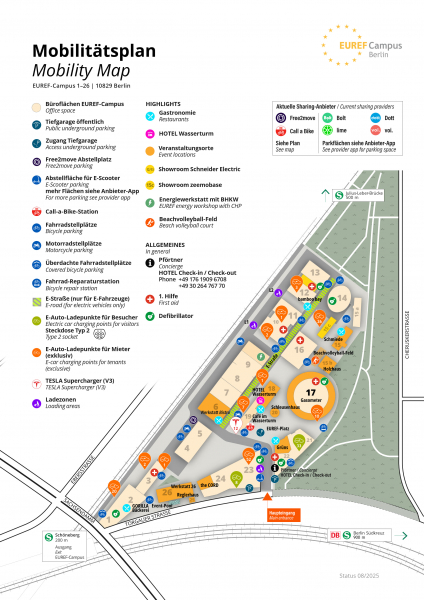
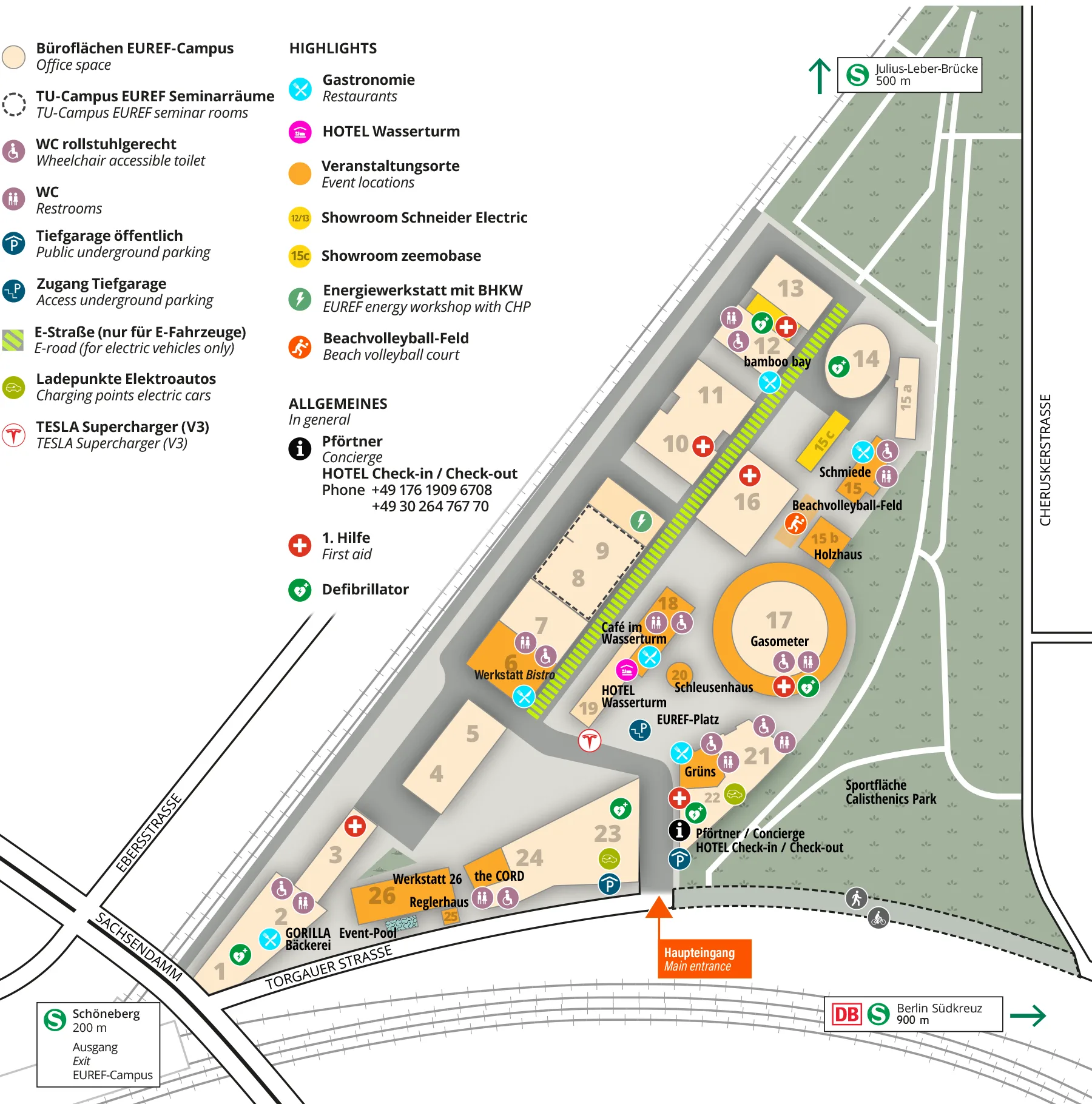
Campus Map

Farbiger Übersichtsplan des Campus