Gasometer Extension

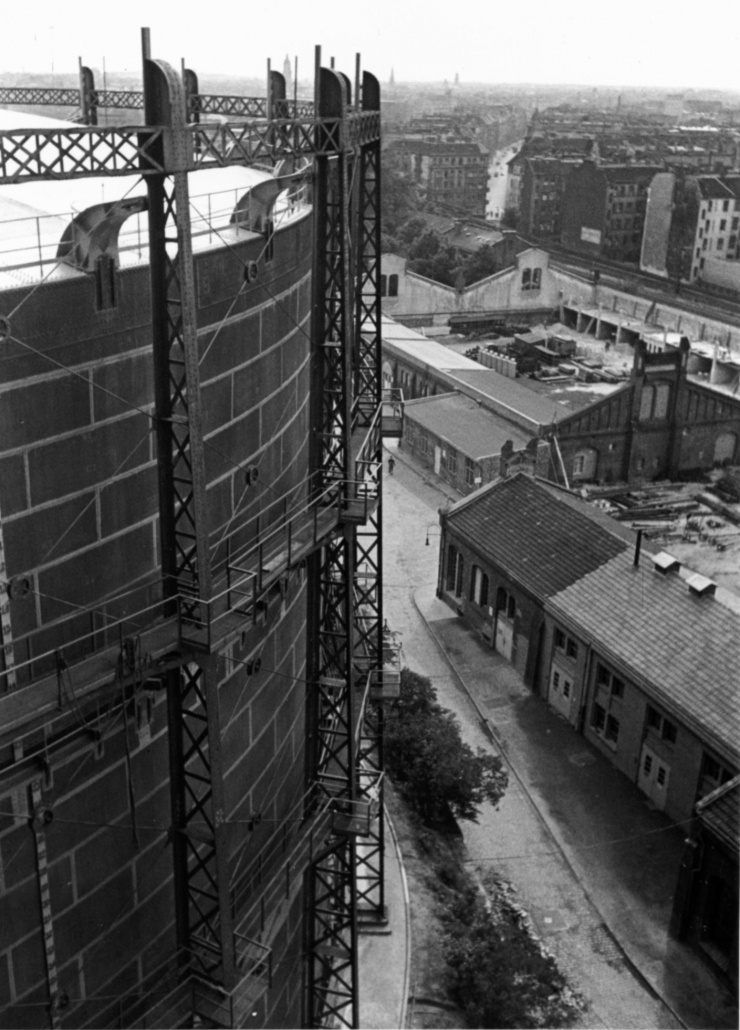
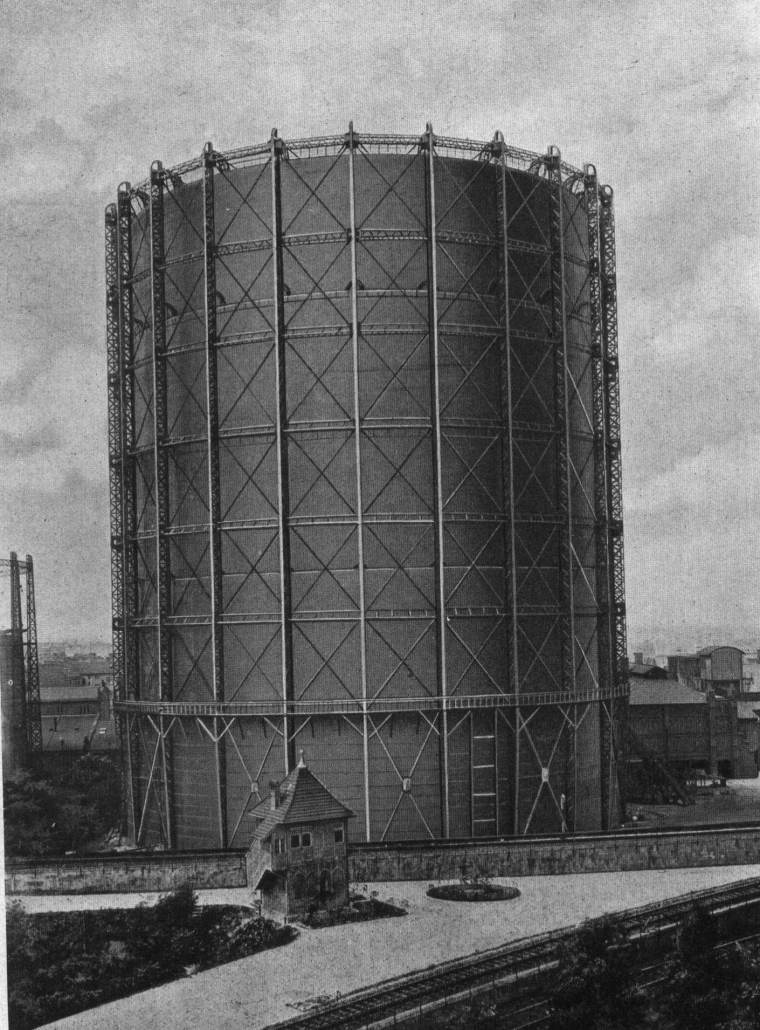
The redesign of the gasometer is based on the historical image of the telescopic tank of the low pressure gas container moving up and down inside the scaffolding. Here, EUREF AG is planning a new building with a homogeneous facade design.

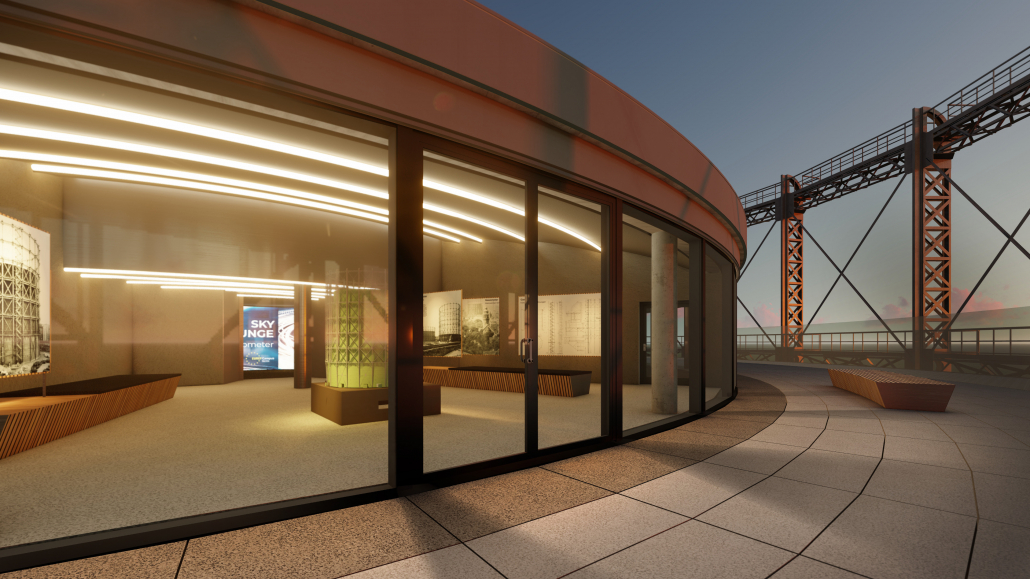
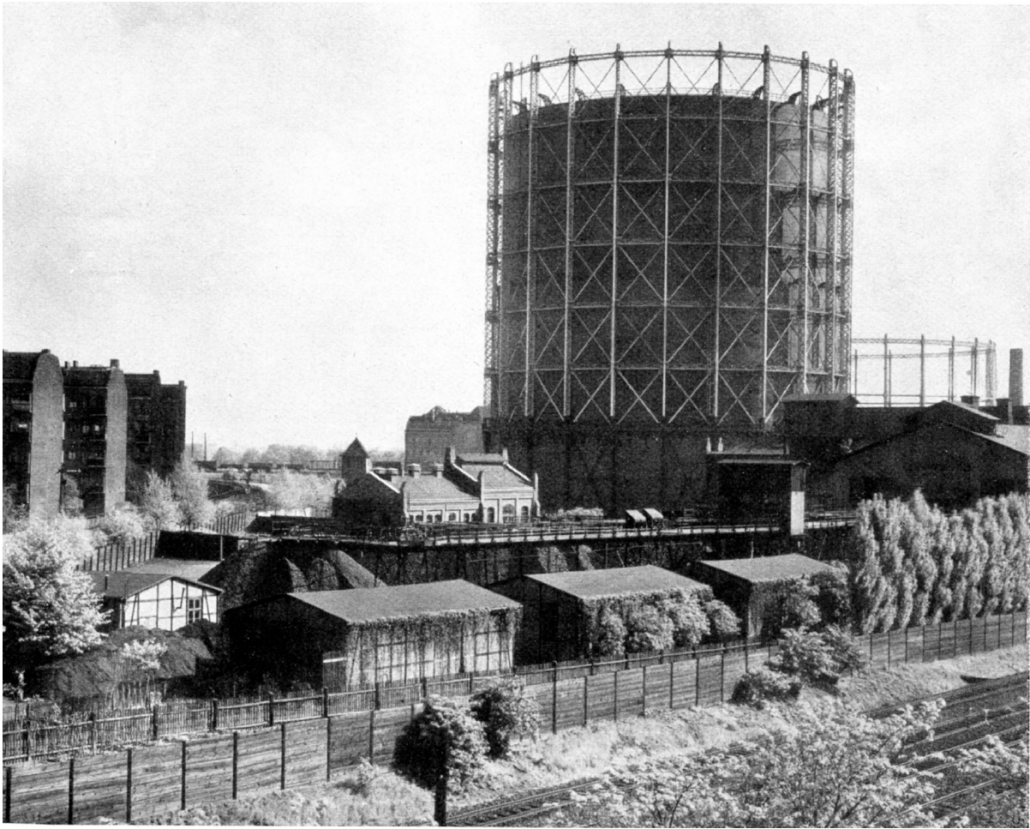
The grey, historical steel scaffolding functions, with a distance of one meter, as a frame for the round new building. The listed steel framework will thus be preserved and visible in its splendor. At the same time, the steel framework is being restored on each floor in accordance with the monument protection regulations. This is done using laser and sandblasting technology.

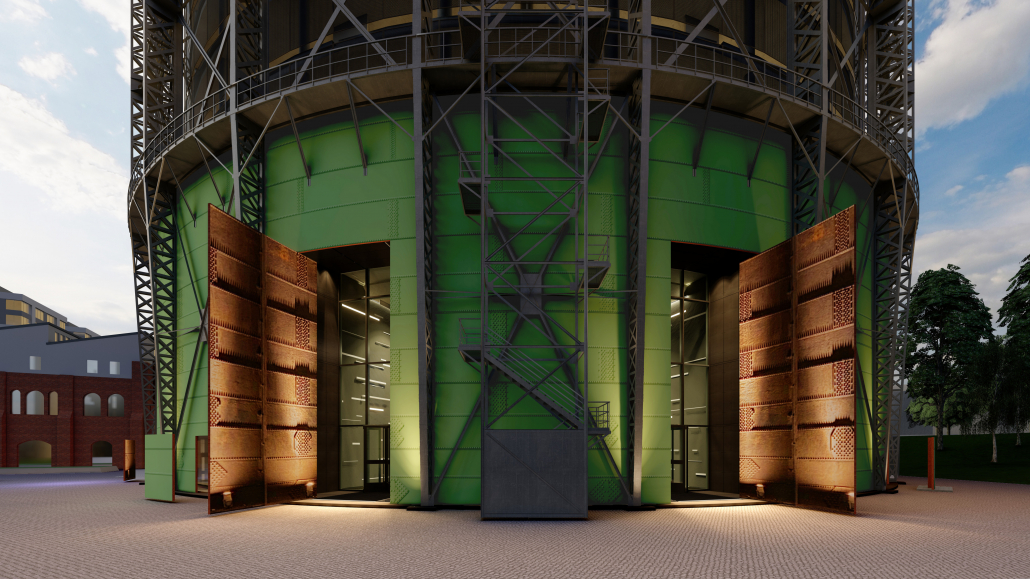
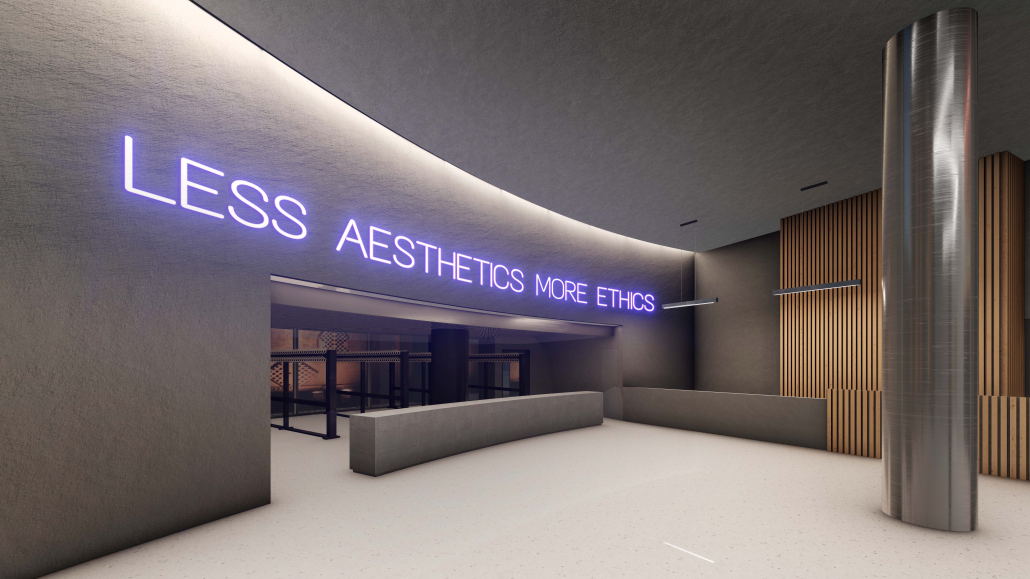
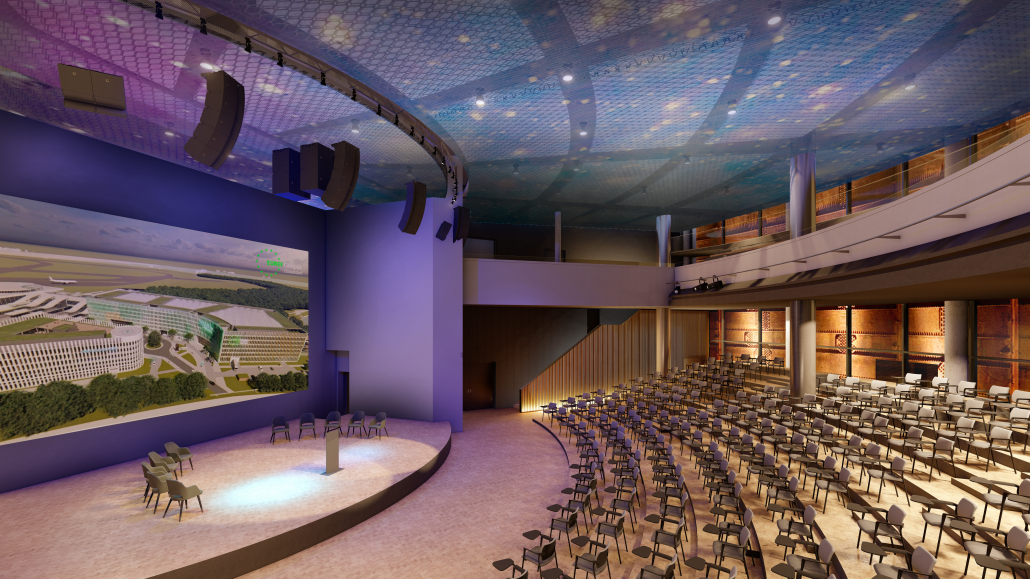
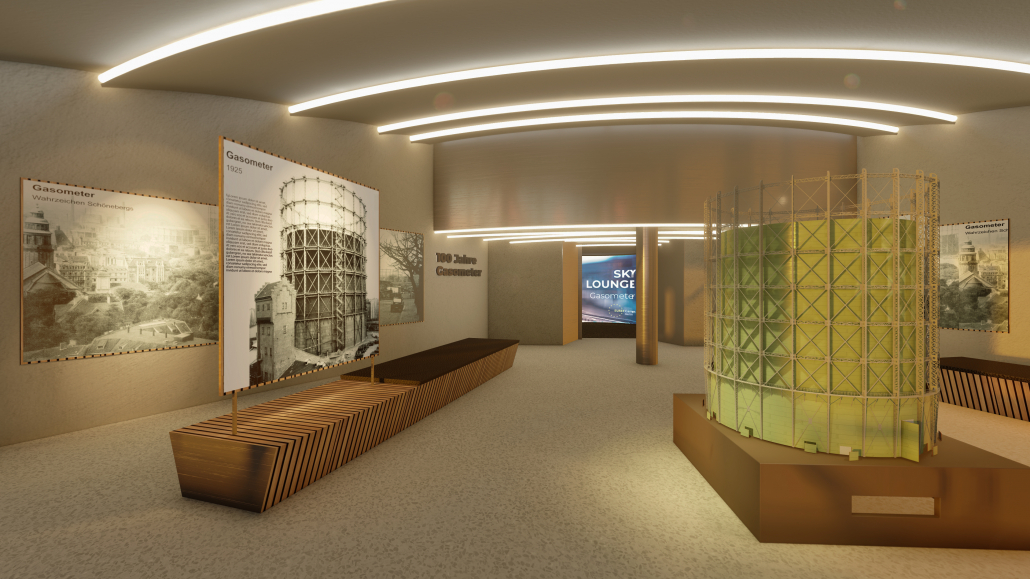
The green steel shell, i.e. the lower part of the gasometer, will once again become the conference area, i.e. the forum of the EUREF campus.

From a height of 16 meters and upwards, EUREF AG is erecting an office building in the Gasometer with an approximate footprint of 28,000 square meters. The façade, which is predominantly glass, will ensure a high degree of transparency in the building. On the upper floors, rooms for presentations and events will be created behind the steel and glass façade. On the top floor of the new building, a sky lounge with a terrace will be built, which will be accessible to the public – the view over Berlin from a height of around 66 meters is part of the package.

The project will cost more than 200 million euros. It is scheduled for completion in summer 2024.
Historic monument, new life

By continuing to use the gasometer as a commercial property, no new area in Berlin has to be sealed, no trees have to be removed. Jobs will be created on existing premises – in a city where commercial space is scarce. In this way a historical monument is preserved and at the same time filled with new life.

“Some engineering structures are unintentionally beautiful. I count the gasometer among them, it is an example of the art of steel construction”.

says Johannes Tücks. He is a board member of EUREF AG, an architect by profession and at the same time the chief planner for the EUREF Campus.

“In the past, urban technology was regarded as ugly and hidden behind poplar trees. Today, we showcase these buildings and open up visual axes for them in new urban development”.

In this way, guided tours of the gasometer could also take place until the start of construction. Since the acquisition of the site, these tours have been made possible for the public to enjoy this unique view.

The planned building will be constructed as KfW-Effizienzhaus 55. This will implement the standard of a lowest-energy building, which is even significantly lower than the current legal requirements for energy consumption according to the German Building Energy Act (GEG). In addition to the highly insulating building shell, the extremely efficient central heating and cooling system, which incorporates renewable energies and combined heat and power generation, is used to generate primary energy.

The energy supply is – as in the other new buildings on the EUREF-Campus – smart. This means that light only burns in the rooms when people are present. In the evening and night hours, the gasometer will also be darkened by blinds.

FAQ – Extension of the Gasometer

The listed gasometer will of course be preserved in its original form. It will be repaired in close cooperation with the responsible monument protection authorities and under scientific supervision. The steel structure will be restored to its original appearance following the recommendation of a state-approved test engineer for steel construction. The design of the building, which is reminiscent of the telescopic container moving up and down, takes up the historical shape of the gasometer. With a long-term economic use, we can ensure the continued existence of the monument in the future.

It was the wish of the Tempelhof-Schöneberg district to build less on the EUREF-Campus. At the same time, it was a common goal to dispense with tunnelling under the railroad embankment in order to create space for the expansion of an elementary school and room for further education and culture in the area provided for this purpose. In the course of these negotiations, a compromise was reached to raise the building in the gasometer by one ring while maintaining a maximum of 135,000 m² of development on the entire area of the EUREF-Campus.

Our plan is now to develop a conference center within the Gasometer and a new office building up to and including the penultimate ring. The new building will be erected within the steel framework and will maintain a respectable distance of one meter to it. There is no connection between the new building and the steel framework. The upper ring remains free!

The steel structure will be restored to its original, historic appearance and refurbished in a manner appropriate to the monument. Simultaneously with the construction of the new building inside, the steel structure is being refurbished in sections using sandblasting techniques.

The historic steel shell of the Gasometer, with a height of around 16 m, allows only a few openings while preserving the monument protection. A conference center will therefore once again be built in this volume – the forum of the EUREF-Campus, so to speak.

A sky lounge with a terrace will be built on the top floor of the new building, which will be open to the public. In the public areas and behind the impressive steel and glass façade, the view over Berlin from a height of around 66 m is included.

Access to the EUREF-Campus as a whole is otherwise possible for the public via the main entrance on weekdays. For security reasons and to protect against vandalism, this entrance is controlled by a gatekeeper.

EUREF AG will be responsible for the structural restoration of Torgauer Straße. The expansion will improve accessibility and thus also lead to a reduction in motorized individual traffic. Unfortunately, the approval of the district authority to start the work is still pending.

The planned building will be constructed as KfW-Efficiency House 55. The standard of a low-energy building will thus be implemented, which will even be significantly below the current legal requirements for energy consumption according to the German Building Energy Act (GEG).

In addition to the highly insulating building envelope, the extremely efficient central heating and cooling system, which is based on renewable energies and combined heat and power generation, is used to generate primary energy.

A disabled restroom will be installed in each of the entrance areas and all elevators will be equipped with barrier-free access. The entrances to the rental units and the garage floor are step-less and have a passage width of at least 0,90 m.

The continued use of the industrial monument for economic purposes will secure its existence in the long term. And from an ecological point of view, the subsequent use of industrial areas also makes sense. This avoids the sealing of new areas. Working places are thus created on an existing industrial site – in a city where industrial space is scarce.

Kontakt

EUREF AG
marketing@euref.de